Last updated November 20, 2026
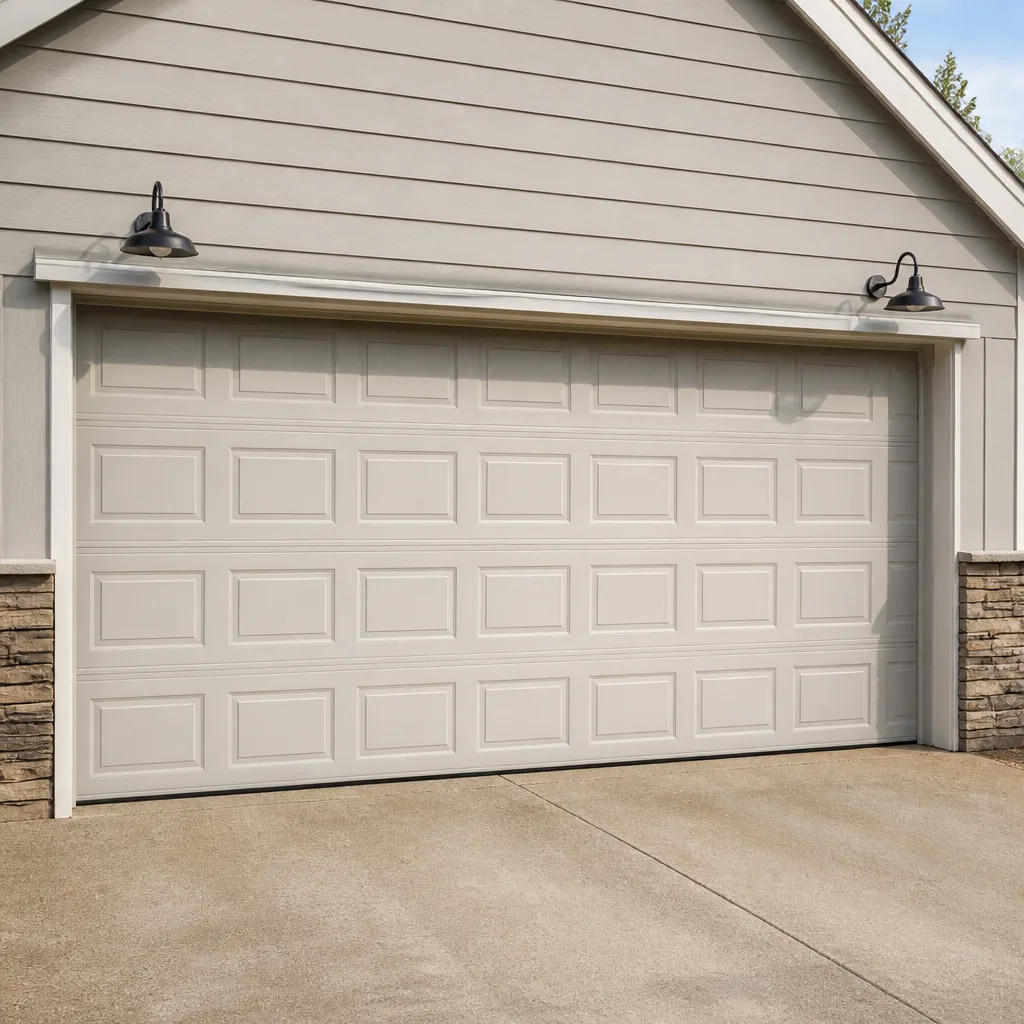 Raised-panel steel
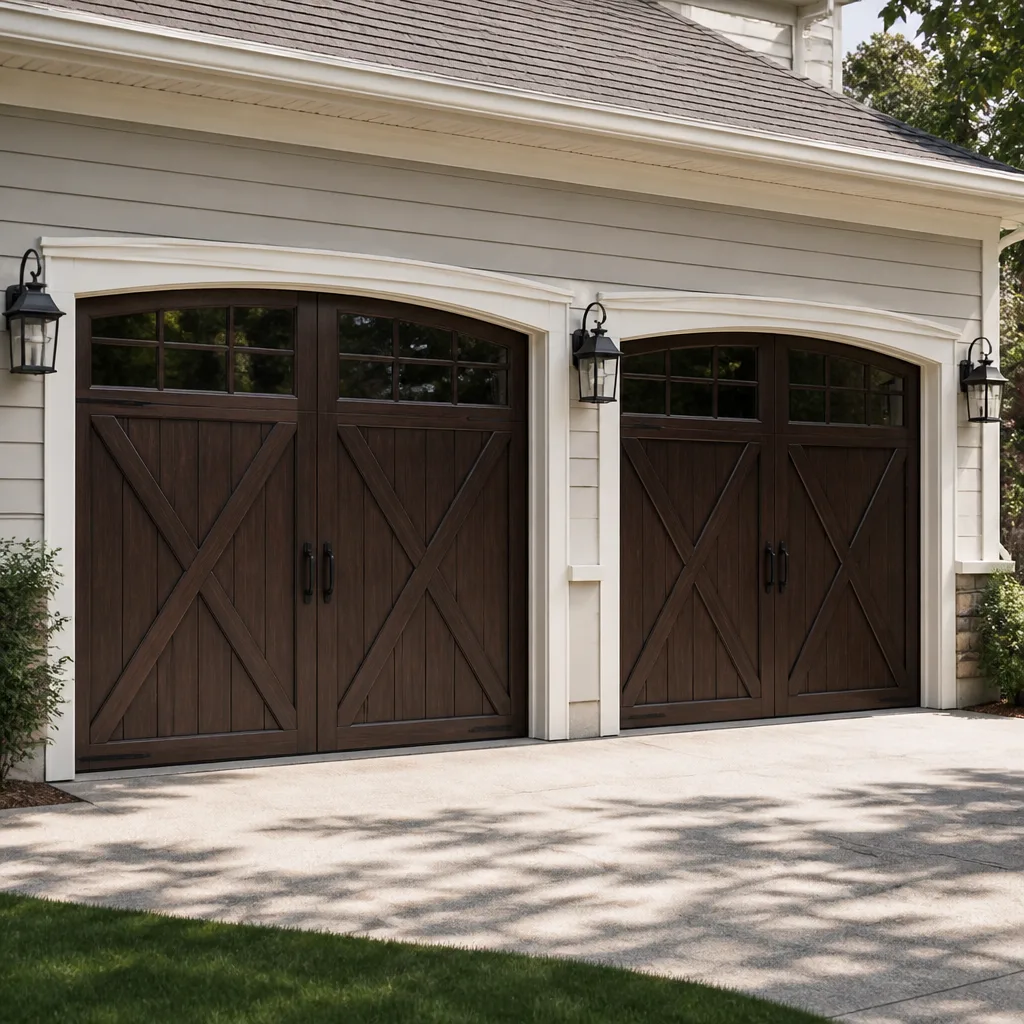 Carriage house
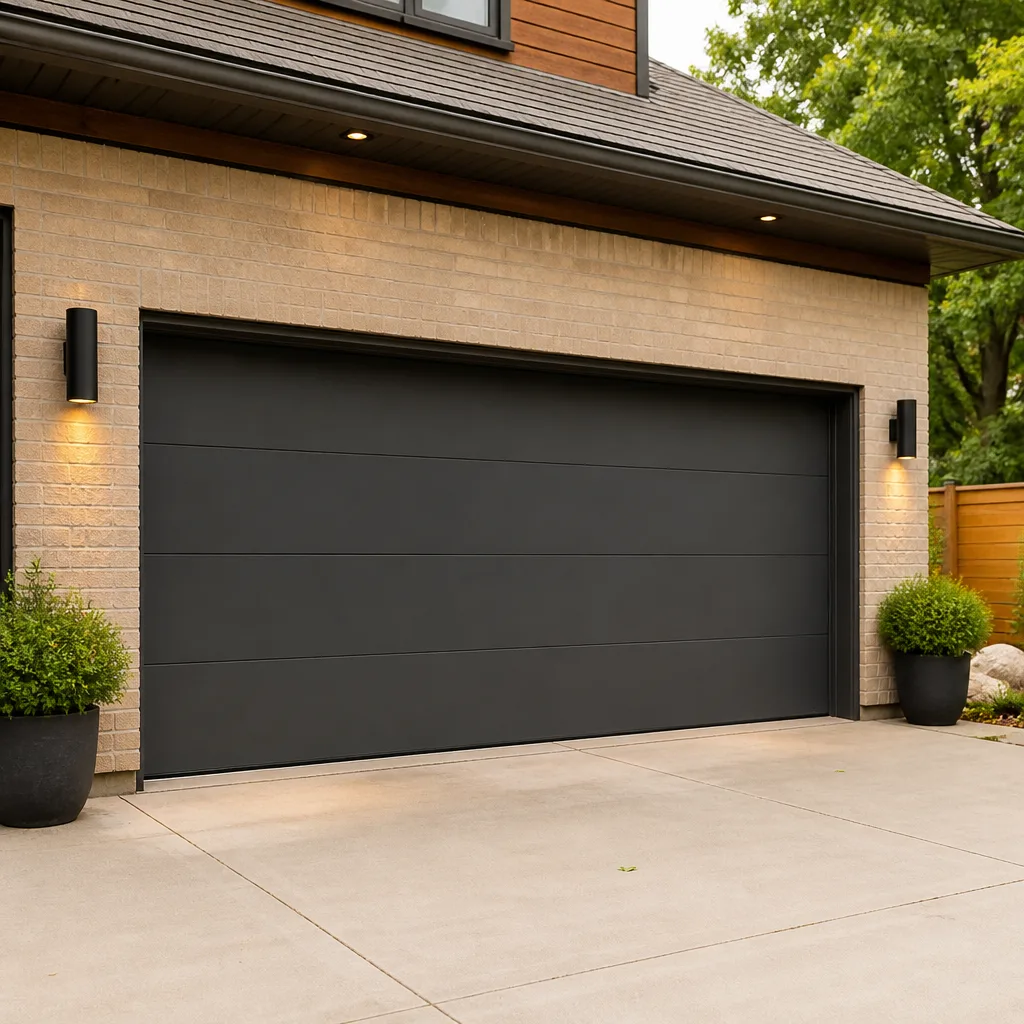 Modern flush
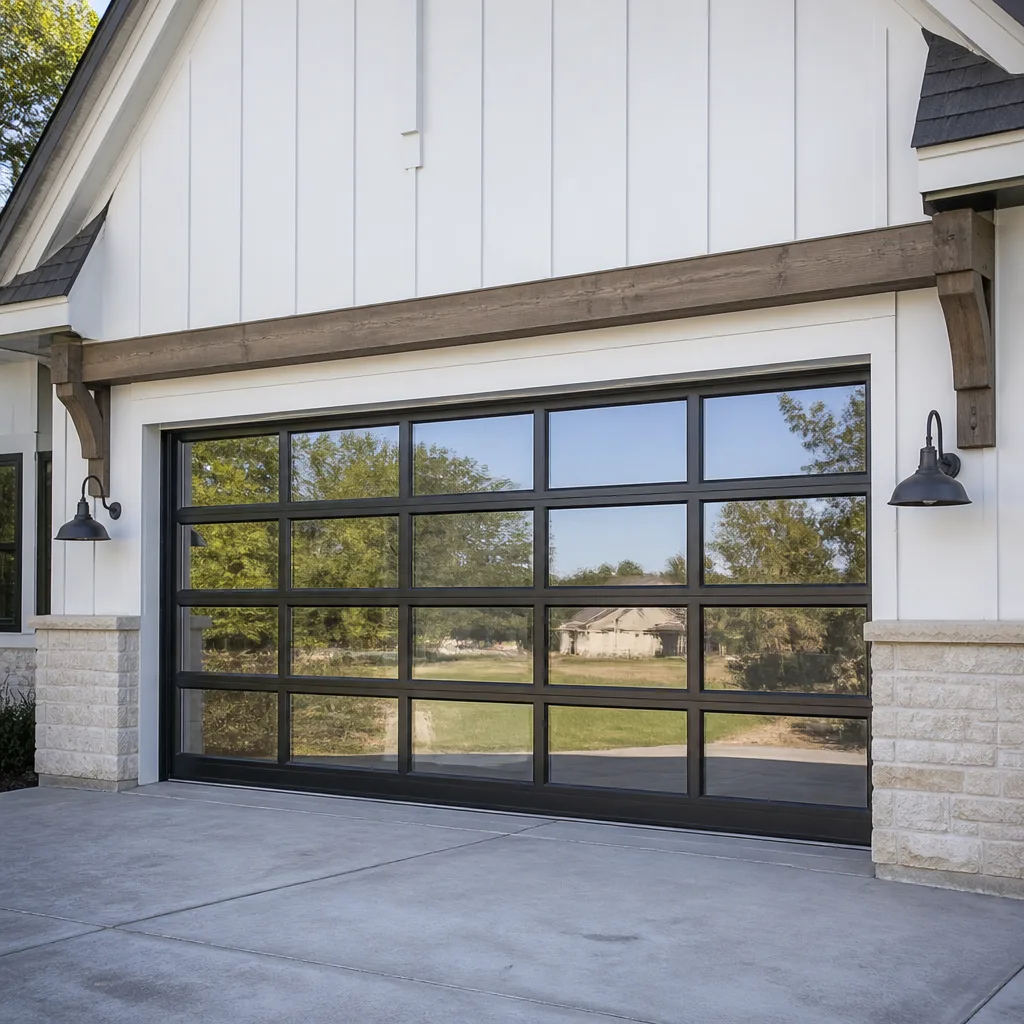 Full-view glass
 LiftMaster openers
 Chamberlain openers
Full 25-point door and opener safety check with every visit - springs, cables, rollers, tracks, and your LiftMaster or Chamberlain opener included
You get a price before we start. It does not change when the pro arrives.
Get your free estimateGarage Door Warning Signs: A Slavic Village Homeowner’s Reference Guide
Most garage doors don’t fail without warning. They complain first – a scrape here, a shudder there, a pause at the halfway point that wasn’t there last month. The trouble is that two sounds that seem similar to a homeowner can point to completely different problems. A grinding noise is usually a lubrication issue. A scraping noise can mean a roller is about to separate from the track, and that one isn’t a weekend project. Knowing which is which decides whether you call today or next week. In this guide, we walk through the sounds, the visual clues, and the movement patterns that tell you what a door is doing before it stops working entirely, with notes specific to Slavic Village homes and the older housing stock you’ll find here.
Quick Answer
A garage door warning sign is any new sound, uneven movement, or visible change in cables, springs, tracks, or panels that wasn’t there before. The signs that need same-day attention are a door that’s visibly tilted, a snapped spring, a cable hanging loose, or a door that won’t stay closed – all mechanical failures, not adjustments. Grinding, squealing, and jerking usually point to wear you can schedule a repair for. When in doubt, keep the door closed and call for a free estimate.
Styles & brands we work with
- Raised-panel steel
- Carriage house
- Modern flush
- Full-view glass
- LiftMaster openers
- Chamberlain openers
Table of Contents
- What the Sounds Are Telling You
- Visual Signs, Organized by Location
- Movement Patterns That Signal Trouble
- The Asymmetry Test: Why a Tilted Door Isn’t a Track Problem
- When Your Opener Is Covering for a Mechanical Failure
- Which Signs Are Urgent and Which Can Wait
- Slavic Village Seasonal Notes
- A Monthly Inspection Routine
What the Sounds Are Telling You
Sound is the earliest signal a garage door gives you, and it’s the one homeowners most often dismiss as normal. Every door makes some noise. What you’re listening for is a change – a new tone, a new rhythm, a new spot in the travel where the noise happens. Here’s what the four most common sounds actually indicate mechanically.
- Grinding. Usually metal-on-metal contact in the rollers, hinges, or the opener’s drive rail. In our experience this is the most common lubrication-related complaint. It’s rarely an emergency, but the longer it’s ignored, the more wear it puts on rollers and the drive gear. A door that grinds for months often ends up needing roller replacement rather than just grease.
- Squealing or high-pitched squeaking. Friction at the hinges, rollers, or the torsion spring’s coil. Squealing that shows up only during the middle of the travel is usually a roller; squealing at the very start or end can point to a hinge that’s seized. Lubrication quiets most of these, but a squeal that returns within a week means the component is worn, not just dry.
- Popping. A single sharp pop during operation is worth taking seriously. It can be a torsion spring that’s starting to fail, a cable winding unevenly on a drum, or a roller jumping its track. Popping from the top section, near the springs, is the one to treat as same-day – a spring that’s about to break is genuinely dangerous to be near.
- Banging. A heavy bang at the top or bottom of travel usually means the door is hitting its limit too hard – either the travel limits on the opener are set wrong or a spring has lost tension and the opener is slamming the door through. Banging also comes from loose mounting hardware. Either way, that impact is stressing the panels and the opener’s gear assembly every single cycle.
If you hear a pop, a bang, or anything that sounds like metal snapping and then the door stops moving, stop pressing the button. A broken spring or a released cable changes how the door hangs, and running the opener on a door without spring tension strains the motor and can drop the door. That’s the moment for emergency garage door service rather than a scheduled visit. If it’s grinding or squealing without a failure, you’ve got time to book a normal appointment and have it looked at properly.
Visual Signs, Organized by Location
A garage door has four zones worth checking, and doing it in the same order every time means you won’t miss something. Look, don’t touch – especially near springs and cables. Here’s what to inspect in each zone, from the top of the door down.
- Top section and springs. Look at the springs above the door. A torsion spring that’s broken usually shows a visible gap in the coil – a clean break, often with the two halves separated. Extension springs (the ones that run along the tracks on either side) can show stretched coils or a snapped spring hanging. Either way, a broken spring is a stop-everything sign. Never try to lift or operate the door to test it.
- Cables. The cables run from the bottom corners of the door up to the drums at the top. Check for fraying, kinks, or a cable that’s come off its drum. A cable hanging loose or resting slack against the door is a same-day call. Cables are under extreme tension and are not something to handle yourself – a released cable can cause serious injury.
- Tracks. Run your eyes down each vertical and horizontal track. Look for dents, bends, or a track that’s pulled away from the wall at a bracket. Tracks that are visibly out of line mean a roller has probably left the track, and the door shouldn’t be operated.
- Bottom section and weather seal. Check the bottom panel for rust, rot, or a seal that’s cracked and hanging. In Slavic Village, where many garages are older and sit on slabs that shift with freeze-thaw cycles, a bottom seal that’s worn lets water and cold air in – and a bottom panel that’s rusted through is a structural issue, not just a cosmetic one.
One note on scope: some of these zones overlap with general home maintenance. We stick to garage doors because that’s all we work on, and it’s why we can read a track or a spring failure on sight. For everything below the door – the slab, the framing, the driveway – that’s a different trade.
Movement Patterns That Signal Trouble
How a door moves tells you as much as how it sounds. Watch one full open-and-close cycle and note anything that’s different from how the door behaved six months ago. Four patterns come up again and again.
- Slow on the way up, fast on the way down. This is one of the clearest signs of a spring that’s lost tension. The springs are supposed to carry most of the door’s weight going up; when they’re weak, the opener has to work harder, so the door crawls upward. Going down, gravity does the work, so it drops faster than it should. Weak springs don’t fix themselves, and the opener pays the price in the meantime.
- Jerking at a specific point in travel. If the door shudders at the same spot every time, that’s a mechanical bind – a bad roller, a bent track, or a hinge that’s seized. The location of the jerk tells you roughly where to look. Jerking that worsens over weeks is the pattern to catch early, before it becomes a stuck door.
- Stopping and reversing without an obstruction. A door that goes up a foot and comes back down, or reverses partway through closing when nothing’s in the way, is usually an opener sensor or limit issue rather than a door problem. It can also mean the door is binding and the opener’s force sensor is reading that resistance as an obstruction. Either way it needs a look before you start overriding it.
- A pause or hesitation at the start. If there’s a beat between pressing the button and the door moving, the opener is straining. Combined with grinding, it points to opener wear. Combined with a slow upward travel, it points back to the springs.
These patterns are what a technician is actually diagnosing when we run a door through a couple of cycles. The trick is that each pattern points to a different system – springs, tracks, or opener – and getting the diagnosis right the first time is what keeps a small repair from turning into a big one. If your movement is off, the fix usually starts with garage door repair rather than a full replacement.
The Asymmetry Test: Why a Tilted Door Isn’t a Track Problem
Here’s the one that surprises most homeowners: a door that’s slightly tilted is almost never a track problem. It’s a cable or spring problem. That distinction matters because the two repairs look similar from the driveway but cost differently and carry different risk.
Here’s the logic. A torsion spring or a matched pair of extension springs is supposed to lift the door evenly on both sides. If one spring is weaker than the other, or one cable has slipped or stretched, the door rises higher on the side with the stronger lift. The tilt you see is the door telling you the two sides aren’t sharing the load equally. A bent track, by contrast, usually shows up as a door that sticks or rubs at one point in the travel – the door stays level, it just catches.
Why it matters: a tilted door usually means a spring or cable repair, and those are the two most dangerous components on the whole system. A track that’s slightly off is a repositioning job. Misdiagnosing a spring problem as a track problem means someone “adjusts” the track, the door tilts again on the next cycle, and the real failure keeps building. A door that’s tilted and tilted more each cycle is also a door that can come off its track entirely – so a visible tilt is a same-day call, not a wait-and-see.
We’ve seen enough Slavic Village doors to know that the older housing here means a lot of original or long-serviced hardware still in place. If your door is tilting, don’t try to level it by adjusting the track or the brackets yourself. Spring and cable work is one of the highest-risk jobs on a garage door, and there’s a reason spring repair is a named service for us rather than something a generalist handles with a ladder.
When Your Opener Is Covering for a Mechanical Failure
Modern openers are built to compensate, and that’s exactly the problem. A LiftMaster or Genie unit that’s working correctly applies a measured amount of force and stops if it meets too much resistance. But the same opener will keep working through a door that’s getting heavier – just with more effort, a longer ramp-up, and a motor that keeps running a second after the door has already stopped. Those are the signs that the opener is masking a door problem.
Watch for three specific behaviors:
- Longer ramp-up time. If the door used to be moving the instant you pressed the button and now there’s a delay, the opener is straining. On a Wayne Dalton or Clopay door with a heavy panel, that ramp-up often points to a spring that’s lost tension.
- Motor running after the door stops. The opener’s gear assembly is still turning, trying to finish a cycle it thinks isn’t done. That’s a sign the travel limits have drifted or the opener’s internal gear is worn.
- Force adjustment cranked up. If someone has already turned the opener’s force sensitivity up to make the door work, the safety margin is gone. The opener will now push through resistance that should stop it – and that’s when a door drops or a panel cracks.
What happens in practice is that the opener hides the mechanical problem until something breaks hard. A door that needed a spring repair three months ago suddenly needs a spring repair and an opener gear replacement, because the opener took all the strain. That’s why we look at the whole system – opener, springs, tracks, cables – rather than just swapping the motor. If the opener itself is the issue, that’s an garage door opener repair conversation. If the door is the issue and the opener is just the messenger, the repair looks different.
Which Signs Are Urgent and Which Can Wait
Not every warning sign is an emergency, and treating them all the same wastes your time and money. Here’s our honest triage, based on what actually goes wrong and how fast.
Same-day, stop-using-the-door signs:
- A broken spring – visible gap in a torsion coil or a snapped extension spring.
- A cable that’s hanging loose, frayed, or off its drum.
- A door that’s visibly tilted or sitting unevenly.
- A door that won’t stay closed or drifts down when you let go.
- Any door that came off its track.
These are mechanical failures where the door’s weight isn’t safely supported. Keep it closed, don’t force the opener, and call for emergency service.
Schedule-a-repair signs:
- Grinding, squealing, or squeaking without a failure.
- Jerking at a single point in travel.
- Slow upward travel with a fast close.
- An opener that’s slower to respond or runs long after the door stops.
- A bottom seal that’s worn or a bottom panel that’s starting to rust.
These are wear-and-tear issues. They’ll worsen, but you’ve got time to book a normal visit rather than pay for an emergency call.
The line between the two isn’t about how loud the noise is. It’s about whether the door’s weight is being held safely. A quiet tilted door is more urgent than a noisy one that’s still tracking straight. If you’re not sure which side of that line you’re on, closing the door and calling for a free estimate is the safest move – and we’ll tell you honestly if it can wait.
Slavic Village Seasonal Notes
Slavic Village’s climate puts specific stress on garage door hardware, and the pattern repeats every year. Knowing what to expect season to season helps you catch a problem before it strands the car.
Winter is the hardest season. Freeze-thaw cycles work on the concrete slab and the door’s bottom seal, and a seal that’s cracked going into winter lets in cold air and moisture that accelerates rust on the bottom panel. Cold also stiffens grease and makes a marginal spring more likely to fail – if a spring is near the end of its life, it’s most likely to go on the first hard cold snap. Before the cold sets in, have the springs and cables checked, and make sure the bottom seal is intact.
Spring thaw brings moisture into older garages, and that’s when a bottom panel that was rusting quietly all winter becomes obvious. It’s also when tracks that shifted with the frost get noticed, because the door starts rubbing. Summer heat expands metal and can make a track that’s slightly out of line bind more. Fall is the best time to schedule a tune-up – get the lubrication, the balance check, and the hardware tightened before the cold returns. There’s no single fix that covers every season, but a door that’s checked once a year stays ahead of the failures.
A Monthly Inspection Routine
You don’t need tools or training to catch most warning signs early. What you need is a consistent routine and a rule about what not to touch. Here’s the walk-around we recommend for Slavic Village homeowners – about five minutes, once a month.
- Look before you move it. With the door closed, check the springs for a gap, the cables for fraying or slack, and the tracks for bends or brackets that have pulled away. Look at the bottom seal and the bottom panel for cracks or rust.
- Listen to one full cycle. Open and close the door once and just listen. Note any new grinding, squealing, popping, or banging, and where in the travel it happens.
- Watch the balance. Half-open the door with the opener and look at the gap under each side. If one side is higher than the other, that’s the asymmetry test from earlier – spring or cable, not track.
- Check the safety reverse. Put a small object in the door’s path and confirm the door reverses when it meets it. If it doesn’t, that’s an opener sensor issue that needs attention.
- Note the opener’s behavior. Is there a delay before the door moves? Does the motor run after the door stops? Either one means the opener is compensating for something.
The rule that goes with the routine: look, don’t touch. Springs and cables are under tension that can injure you, and adjusting them is a job for a trained professional. If you spot any of the same-day signs, stop the routine and call. If it’s grinding, jerking, or slow travel, book a repair and get it handled before it becomes a failure.
Common Mistakes to Avoid
- Diagnosing a tilt as a track problem. A tilted door is almost always a spring or cable issue, not a bent track. Adjusting the track on a door with a weak spring just delays the real failure and adds cost.
- Ignoring the grinding because the door still works. Grinding is usually lubrication-related, but it’s also the earliest sign that rollers and hinges are wearing. Catching it early is a cheap fix; ignoring it turns into roller and drive-gear replacement.
- Turning up the opener’s force setting to make the door work. That removes the safety margin and lets the opener push through resistance it should stop for. It’s how a door drops.
- Trying to lift or operate a door with a broken spring or loose cable. Springs and cables are the two most dangerous components on the system, and the weight is no longer safely held. Keep the door closed and call.
- Skipping the pre-winter check. Slavic Village’s cold snaps are when marginal springs fail. A fall check catches a spring that’s near the end of its life before it goes on the coldest morning of the year.
- Calling a general handyman for garage door work. A generalist can handle a lot, but they don’t carry brand-specific parts or diagnose a Genie or Amarr system the way a garage door specialist does. One call to a specialist usually covers diagnosis and repair.
- Assuming a slow door needs a new opener. A door that’s slow on the way up is usually telling you about the springs, not the motor. Replacing the opener without fixing the springs just wears out the new opener.
See the difference
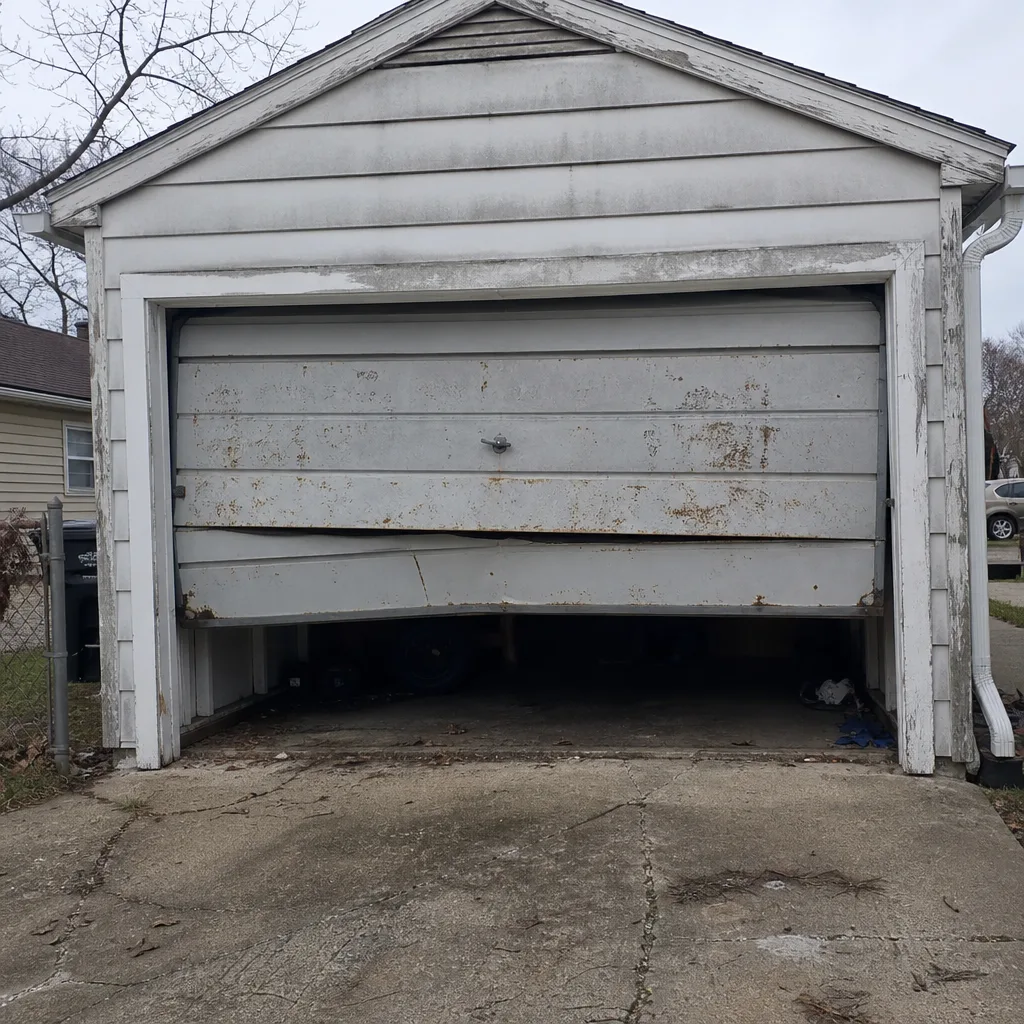 Before
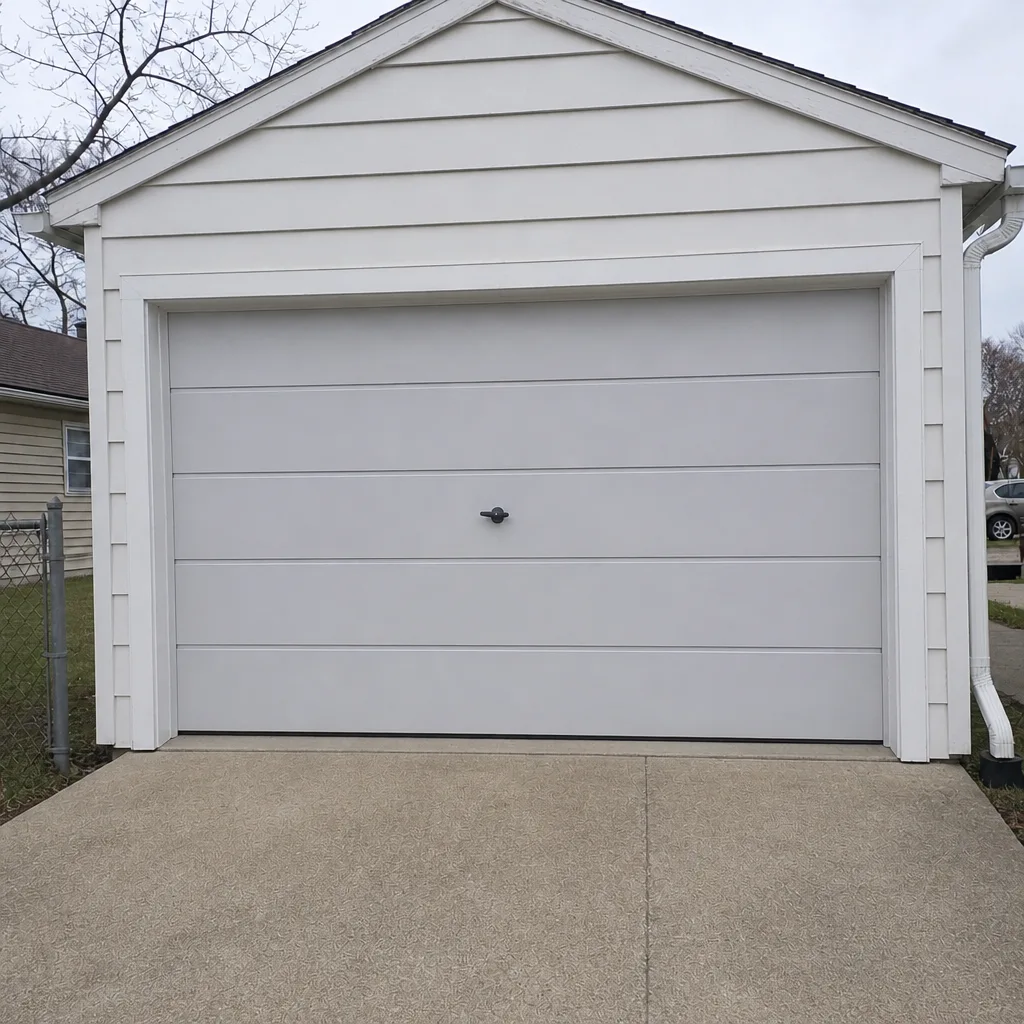 After
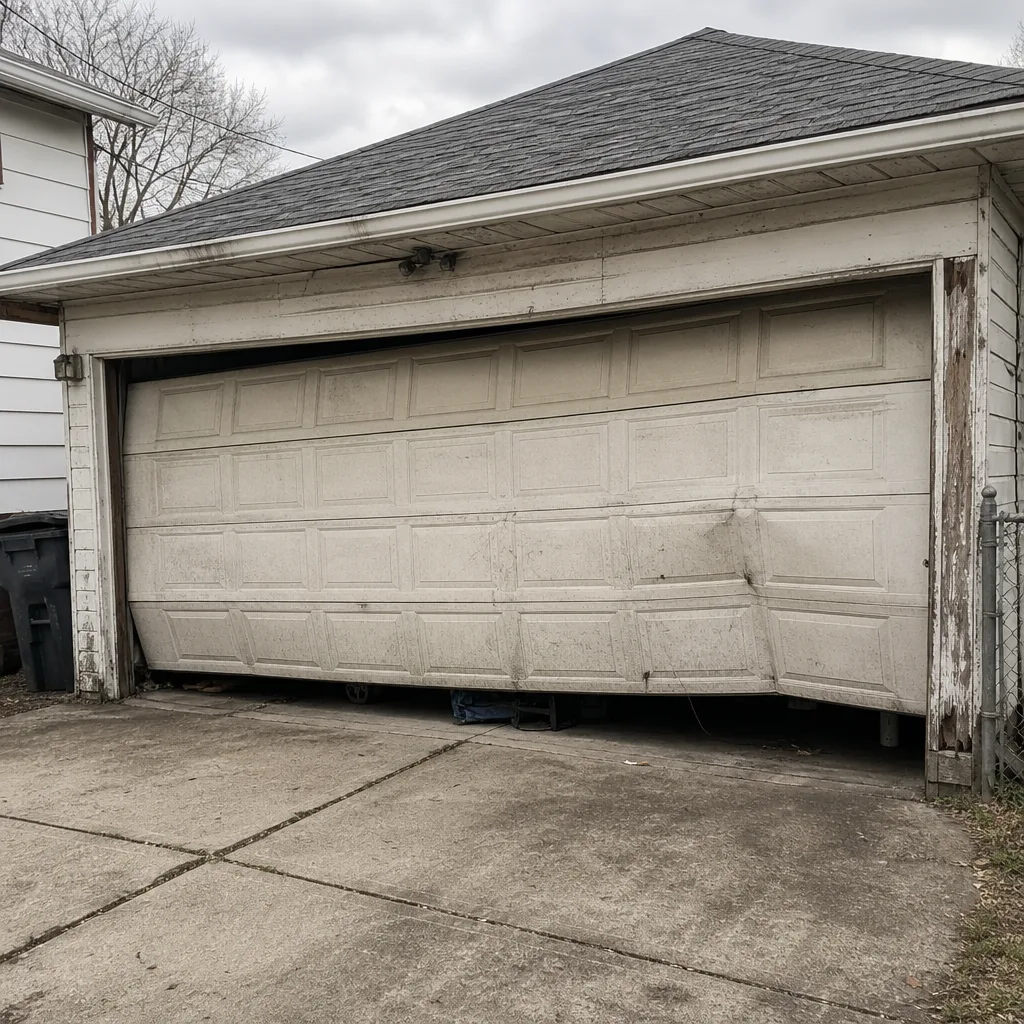 Before
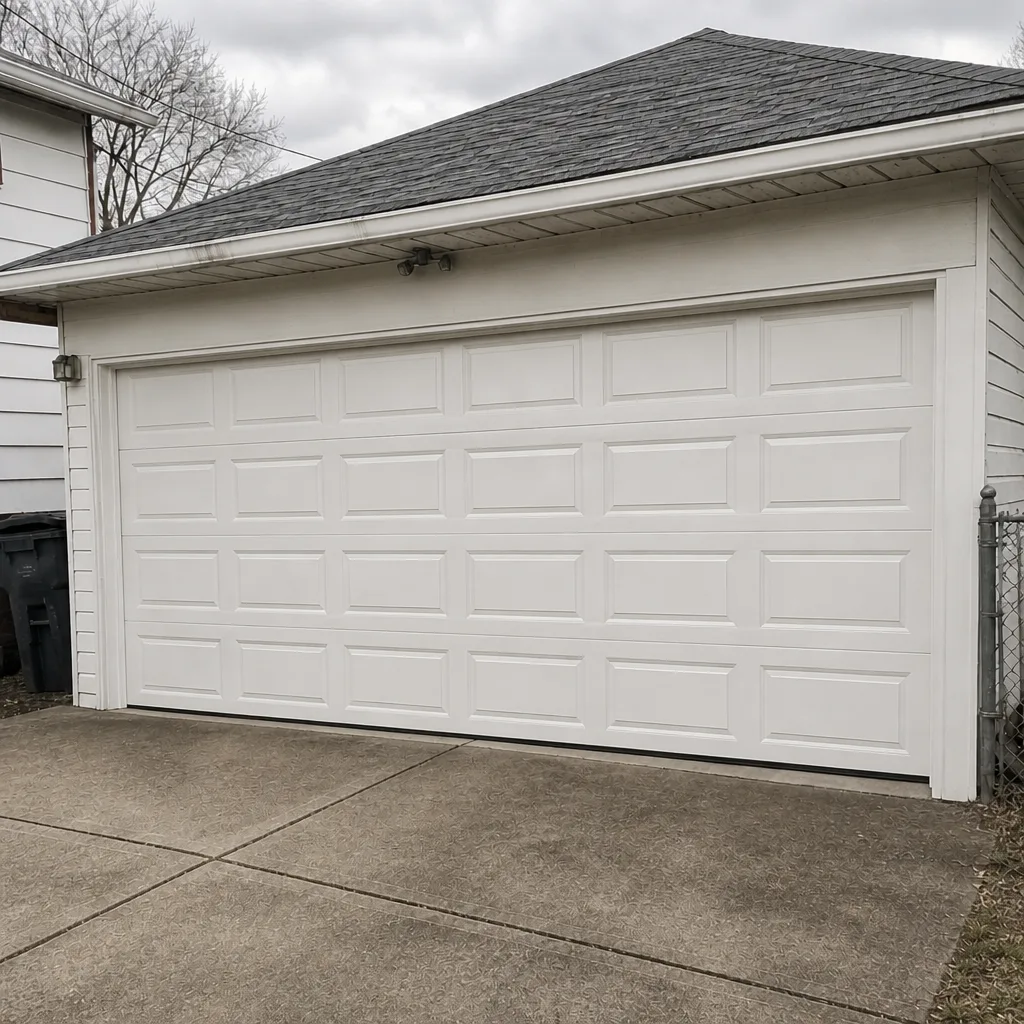 After
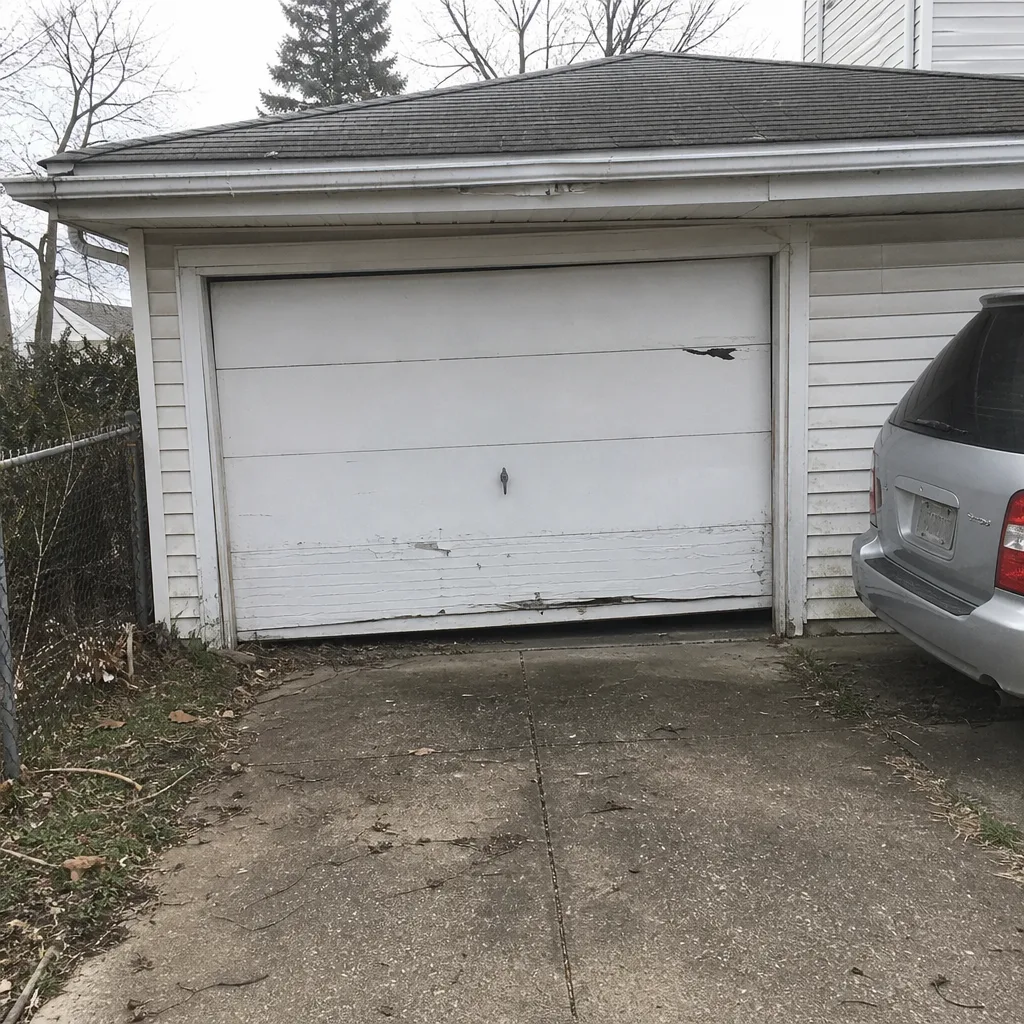 Before
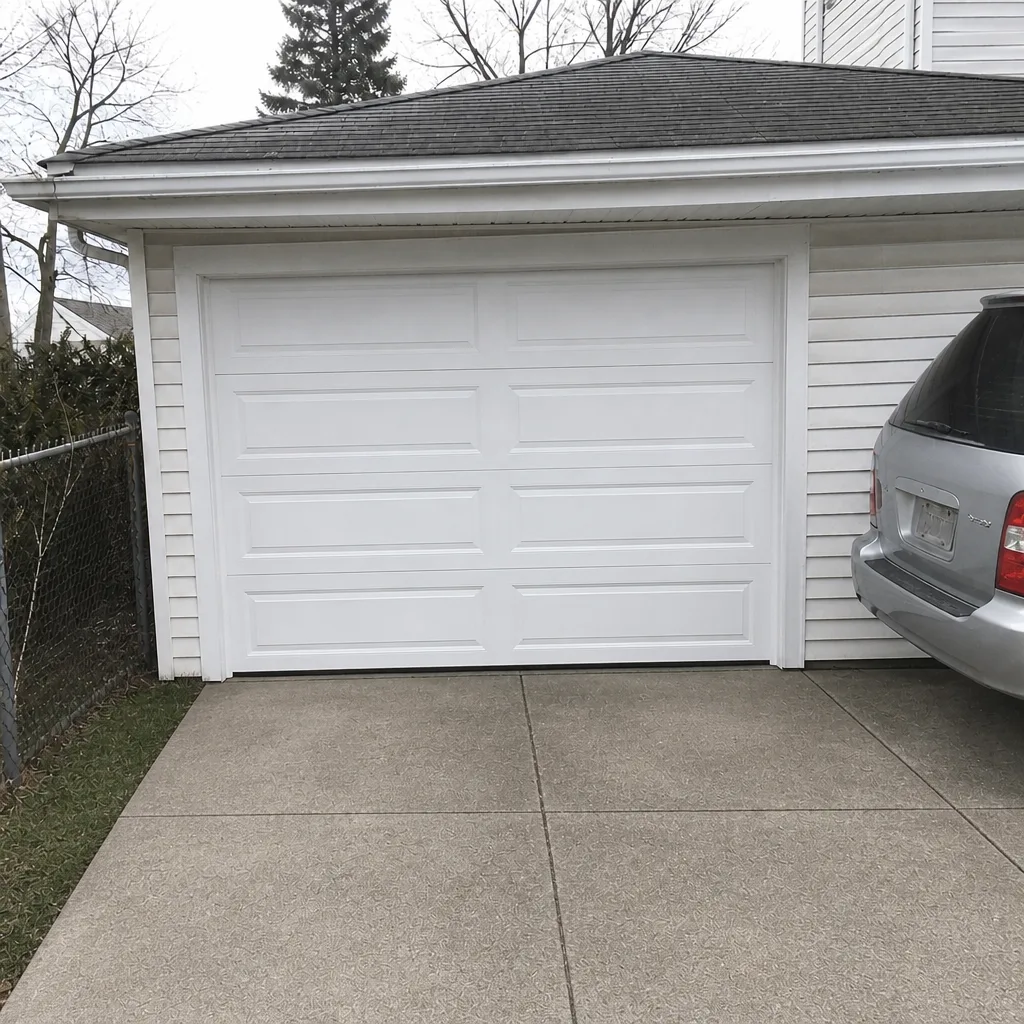 After
When to Call a Professional
Call a professional the same day for any of these: a visibly tilted door, a broken spring, a loose or frayed cable, a door off its track, or a door that won’t stay closed. These are mechanical failures where the door’s weight isn’t safely supported, and operating the door can make it worse. Call for a scheduled visit for grinding, jerking, slow travel, an opener that runs long after the door stops, or a bottom seal that’s worn. And call if you’re simply not sure – a five-minute look from someone who sees garage doors every day is worth more than a guess. Garage Door Repair Slavic Village offers free estimates in Slavic Village – call (855) 814-1061. We work on the brand you already have, from LiftMaster and Chamberlain openers to Clopay, Amarr, Wayne Dalton, and Raynor doors, and spring repair is a named service for us, not an afterthought.
Frequently Asked Questions
The clearest early sign is a single sharp pop during operation, or a door that’s slow on the way up but fast on the way down. A torsion spring that’s failing often shows a small gap in the coil before it goes completely. If you see a gap, a broken coil, or a snapped extension spring, stop using the door and call. Call (855) 814-1061 for a free estimate.
No, grinding is usually not an emergency – it’s typically metal-on-metal contact in the rollers, hinges, or opener drive that lubrication or a small part replacement fixes. The exception is grinding that’s accompanied by a pop or a door that stops moving, which points to a bigger failure. Either way, schedule a look before the wear spreads. Call (855) 814-1061 for an exact quote – estimates are free.
A slightly tilted door is almost always a spring or cable problem, not a bent track. One side is getting more lift than the other, so the door rises unevenly. That’s a same-day call because a spring or cable that’s failing can drop the door. Call (855) 814-1061 for a free estimate.
Some signs can wait for a professional, but springs and cables should never be touched by a homeowner – they’re under extreme tension and are one of the highest-risk components on the door. Lubrication and visual checks are fine. Anything involving a spring, a cable, or a track adjustment should go to a trained technician. Call (855) 814-1061 and we’ll tell you honestly what needs doing.
If the opener takes longer to start, runs a second after the door stops, or has had its force setting turned up, it’s compensating for resistance from the door itself. That resistance usually traces back to the springs or the tracks. Get the door checked before the opener takes the strain. Call (855) 814-1061 for a free estimate.
A door needs replacement when the panels are structurally compromised – rusted through at the bottom, cracked, or dented badly enough to affect the panels’ stability – or when the door is old enough that repair costs approach the price of a new one. Most warning signs are repairs, not replacements. For a full new door, that’s garage door installation, which we handle as part of the same service. Call (855) 814-1061 for a free estimate and we’ll give you a straight answer on repair versus replace.
The Bottom Line
A garage door tells you what’s wrong before it fails, but only if you know what to listen for. The sound a door makes, the way it moves, and the way it sits are all mechanical reports – and the difference between a grinding noise and a scraping one is the difference between a scheduled repair and a same-day call. The same-day signs are a tilted door, a broken spring, a loose cable, or a door that won’t stay closed. Everything else can be booked. In Slavic Village, where older doors and cold snaps are both routine, the seasonal inspection is the highest-value habit you can build. Our technicians have up to 15 years of experience, and we work on the brand you already have. For a free estimate on any warning sign in this guide, call (855) 814-1061 – one call covers it.
For repair in Slavic Village, start with Garage Door Repair Slavic Village and we’ll get your door back on track today.
Written by the team at Garage Door Repair Slavic Village.